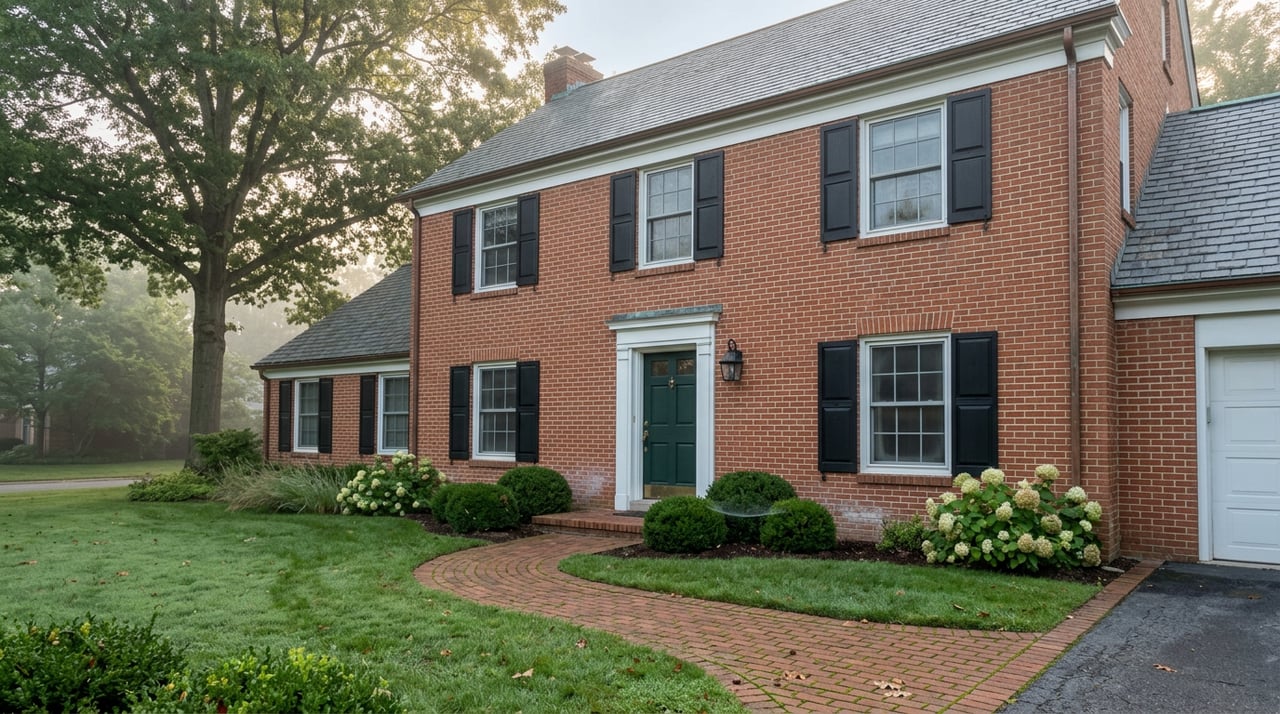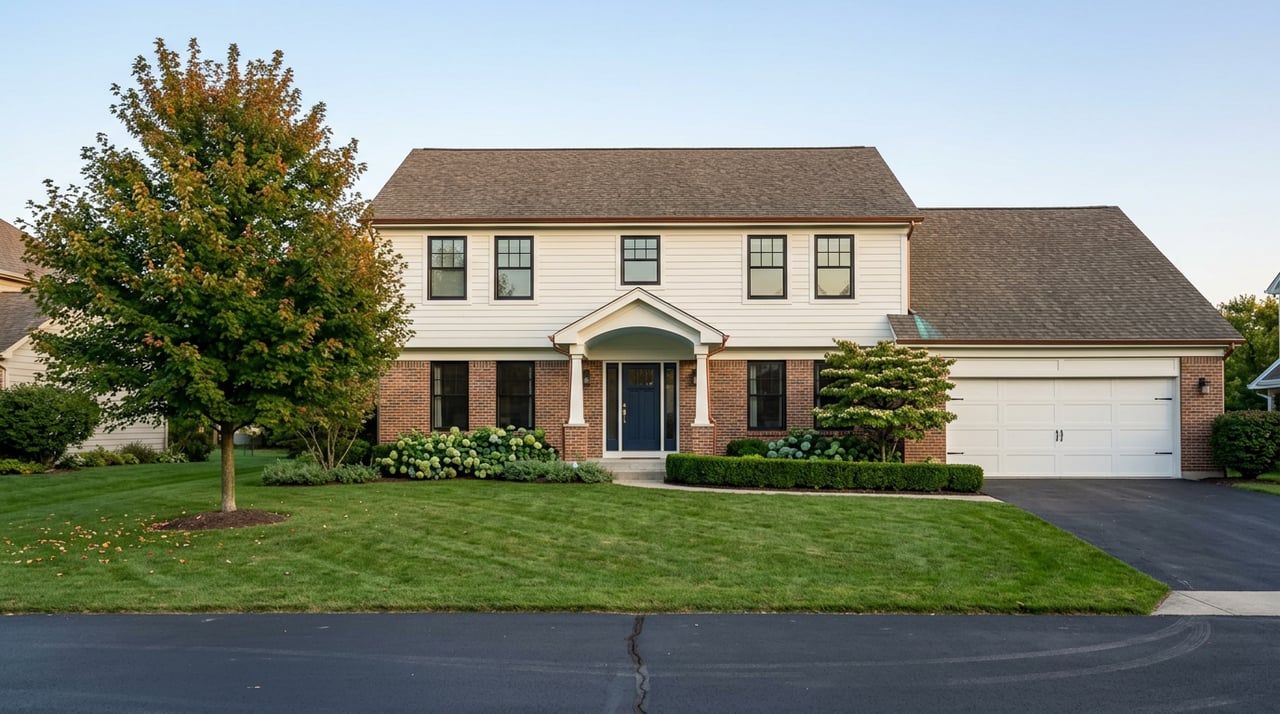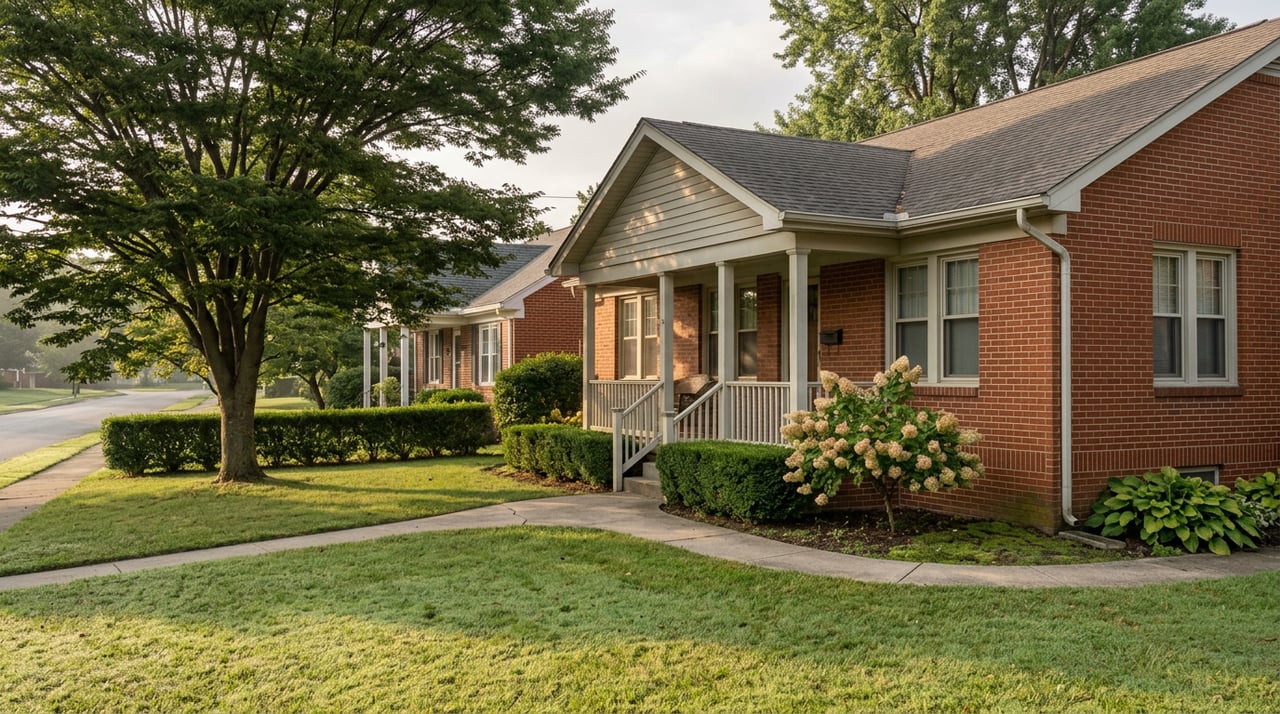
Walk the curved streets of Union Park Gardens on any evening and you will not pass a single restaurant. No corner bistro, no pizza counter, no taproom tucked into a converted rowhome. The neighborhood's own blocks hold exactly what they were built to hold in 1918: brick and stucco rental homes wrapped around a green parkway, laid out by a landscape architect who was thinking about light and setbacks, not storefronts.
That absence is not an oversight. It is baked into the plan. And it explains something residents already live with but rarely name out loud: the reason dinner always means walking toward the edge of the neighborhood instead of through the middle of it.
A Plan Built Without a Main Street
Union Park Gardens went up fast, between 1918 and 1919, as emergency housing for shipyard workers building ships for the U.S. Shipping Board's Emergency Fleet Corporation during World War I. The city needed workers housed within walking distance of the yards, so the Liberty Land Company and Lynch Construction Company put up more than 500 rental homes on a 58-acre site bounded by Lancaster Avenue and Union Street.
The design came from landscape architect John Nolen and architect Emile G. Perrot of the firm Ballinger and Perrot, who borrowed from the English Garden Suburb movement: curving streets instead of a grid, a long parkway running down the center, and just five different floor plans varied with gables, brick bonds, and roof lines so no two blocks felt identical. What the plan did not include was a commercial spine. No block was set aside for shops or restaurants. The homes were the whole point.
That choice made sense for a neighborhood built to house workers who had jobs to walk to and needed somewhere to sleep. A century later, it means the people living inside the curve still look outward when they want dinner, because the plan never gave them anywhere to look inward.
The Boundary Kept Being a Street
Here is the part that turns a historical footnote into something residents actually use. Union Street, the same name that marks the neighborhood's edge, does not stop being a real street once it leaves Union Park Gardens. It continues north into Wilmington's Little Italy, where it becomes the spine of the city's oldest surviving restaurant corridor.
A short list of what sits along that stretch right now:
- Walter's Steakhouse, 802 N. Union St., opened in 1993 and billed as the oldest steakhouse in Wilmington. Certified Angus beef, a banquet room that seats up to 60, and a kitchen that still makes everything in house.
- Eclipse Bistro, 1020 N. Union St., opened in the fall of 1996 as part of the Platinum Dining Group. Thirty years in, it is still one of the more talked-about kitchens in the city, built on the idea of simple food done well rather than a rotating concept.
- Rocco Italian Grill & Sports Bar, 701 N. Union St., a newer fixture in the same stretch, serving the neighborhood's sports-bar-and-red-sauce crowd.
- M. Fierro & Sons, a cheese shop at 1025 N. Union St., in continuous operation since 1928, when Michael Fierro started making mozzarella and ricotta in the basement of a Union Street grocery store. It has since added South American cheeses like queso fresco to a counter that still turns out the Italian basics.
None of these businesses sit inside Union Park Gardens. All of them sit on the street that names its border. For a resident, the practical result is the same as if they were inside the neighborhood: dinner is a walk, not a drive.
What's Actually Yours, Versus What You Borrow
It helps to separate what belongs to the neighborhood itself from what it leans on next door.
| Inside Union Park Gardens | On the boundary (Union Street) |
|---|---|
| Bancroft Parkway, the central green spine running the length of the community | Walter's Steakhouse and Eclipse Bistro, the two longest-running dinner spots on the corridor |
| Clarence Fraim Boys & Girls Club | Rocco Italian Grill & Sports Bar |
| Fraim Center for Active Adults | M. Fierro & Sons cheese shop, since 1928 |
| Union Park Gardens Neighborhood Association, based at 2116 Gilles St. | Little Italy's broader restaurant district, which also runs along Lincoln Street |
The left column is what Nolen actually designed for: a place to live, raise kids, and walk a dog down a parkway. The right column is what the neighborhood has always depended on for everything else. Neither side works without the other, which is exactly why residents don't think of it as a gap. It reads as a five-minute walk, not a missing amenity.
The One Meeting Worth Putting on the Calendar
If there is a piece of this that residents actually control, it is the Union Park Gardens Neighborhood Association, which meets the first Wednesday of February, May, August, and November at 7 p.m. via Zoom, according to the city's own civic association directory. That puts the next meeting on Wednesday, November 4, 2026.
These are not glamorous meetings. They are the forum where a recurring complaint about motorized bikes cutting through the parkway, or a question about Fraim Center programming, gets an actual answer instead of disappearing into a neighborhood app thread. Anyone who wants in can reach the association directly at [email protected]. For a neighborhood with no commercial strip of its own, that email address and that Wednesday night call are the closest thing to a town hall Union Park Gardens has.
Same Curve, Same Border
None of this changes if you already live here. You already know the walk to Union Street, already have an order at Eclipse or a go-to cut from Walter's, already cross the parkway to the Boys & Girls Club without thinking about why the block layout curves the way it does. What changes is understanding that the curve and the border were never meant to be separate systems. Nolen drew a neighborhood that assumed its residents would look outward for commerce and inward for quiet. Union Street kept its half of that bargain for more than a hundred years without anyone having to ask it to.
That is the whole shape of the place: quiet streets that were never supposed to hold a restaurant, bordered by the one street in the city that has held onto its restaurants longer than almost anywhere else in Wilmington.
If you are weighing a move to a neighborhood built this way, or you own property here and want a clearer read on what that border actually does for resale and rental interest, Harrison Properties Ltd knows Union Park Gardens block by block. Reach out for a free home valuation and a conversation about what a neighborhood with no main street of its own is actually worth.